2026 Kitchen Backsplash Trends: Design Ideas & Material Guide
Elevate Your Kitchen Design with the Perfect Back Splash for Kitchen
The back splash for kitchen was originally invented to protect walls from bacon grease and spaghetti sauce. Today, it is the “jewelry” of the kitchen—the one place where you can safely take a design risk without breaking the bank.
In 2026, the trend is moving away from the safe, standard white subway tile. Designers are embracing texture, height, and bold materials. Here is your guide to choosing the perfect kitchen tile.
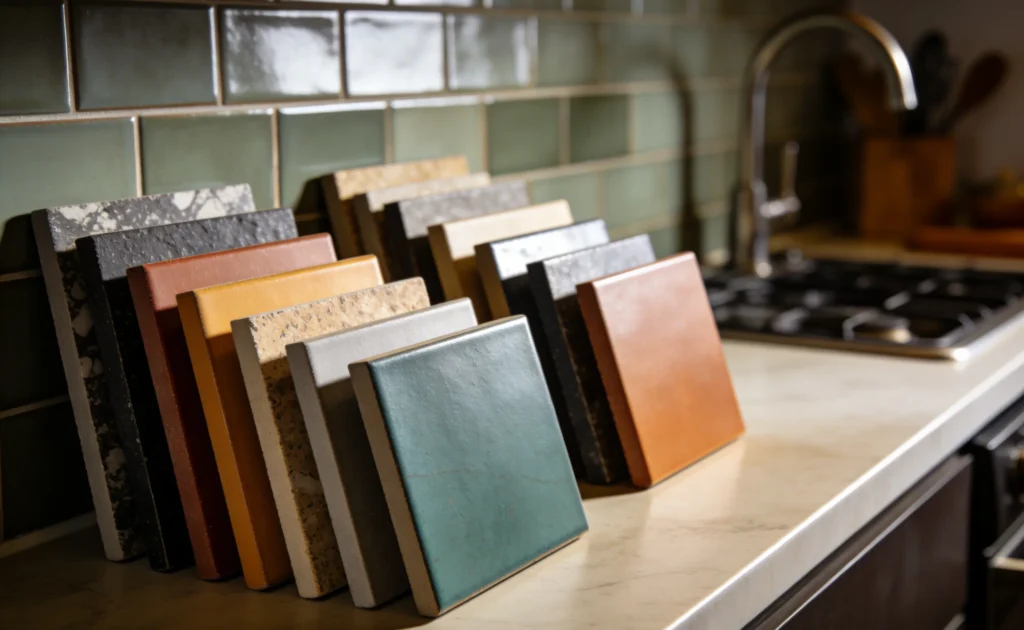
1. Material Comparison: Which is Right for You?
Ceramic/Porcelain:
Pros: Affordable, easy to cut, millions of colors.
Cons: Can look generic if not styled well.
Glass Tile:
Pros: Reflects light (makes small kitchens look bigger), non-porous (no stains).
Cons: Trends change quickly; dated glass mosaics can lower home value.
Natural Stone (Marble/Travertine):
Pros: Timeless luxury, unique veining.
Cons: High maintenance. Must be sealed. Warning: Acidic foods (lemon, tomato) can etch polished marble instantly.
2. 2026 Design Trend: Height and Layout
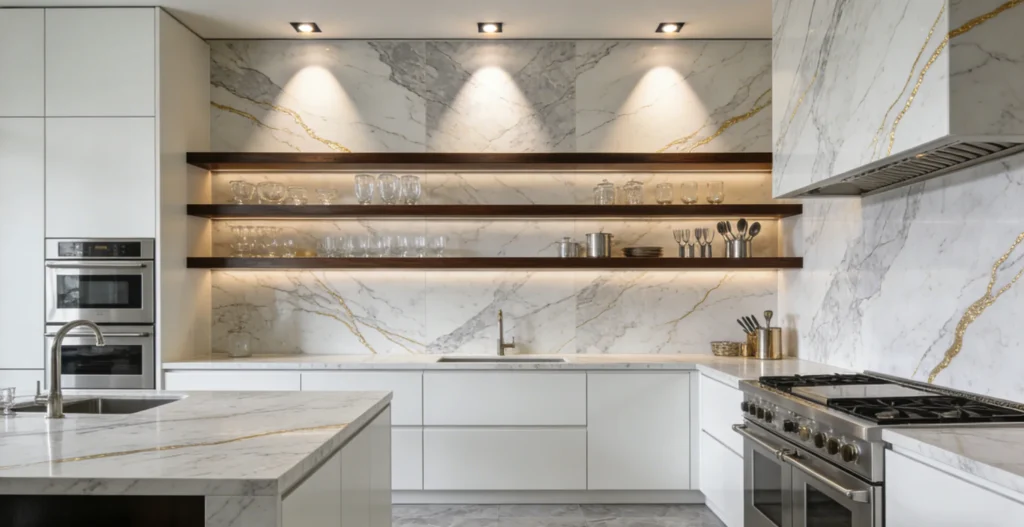
Counter-to-Ceiling: Don’t stop at the bottom of the cabinets. Take the tile backsplash all the way to the ceiling, especially around the range hood or open shelving. This draws the eye up and makes the room feel grand.
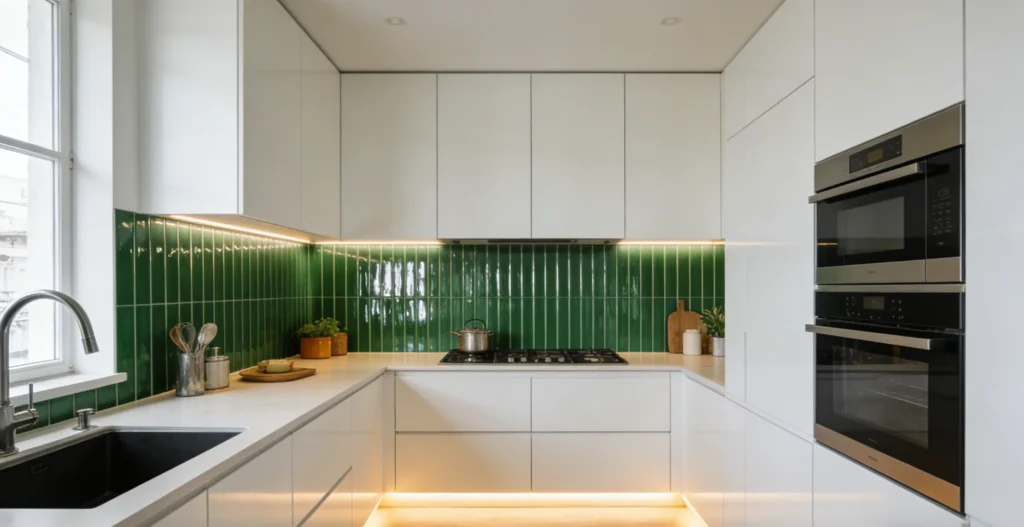
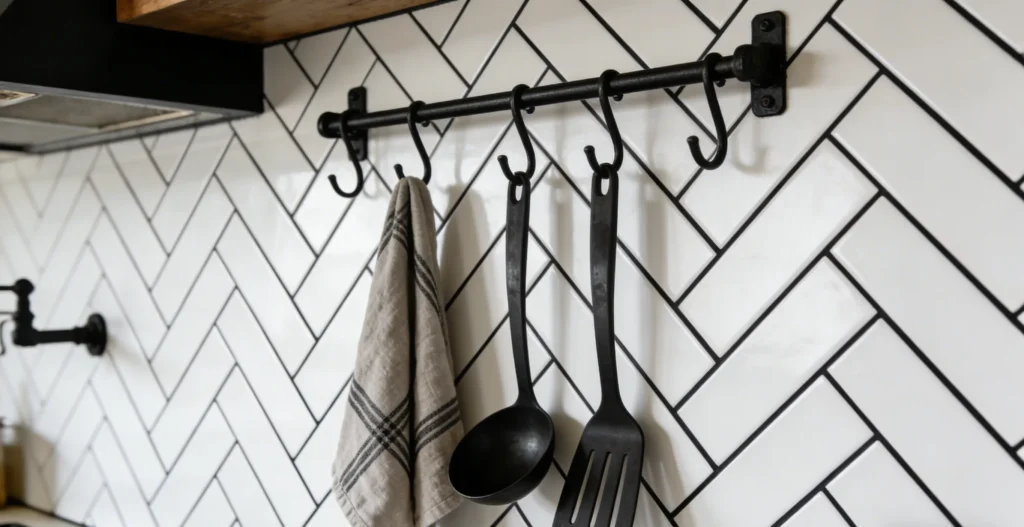
Vertical Stacking: Instead of the brick-pattern (offset), stack rectangular tiles vertically. This is a hallmark of modern 2026 design.
Slab Backsplash: Using the same material as the countertop (Quartz or Porcelain slab) on the wall. Zero grout lines, infinite luxury.
3. Lighting and Texture
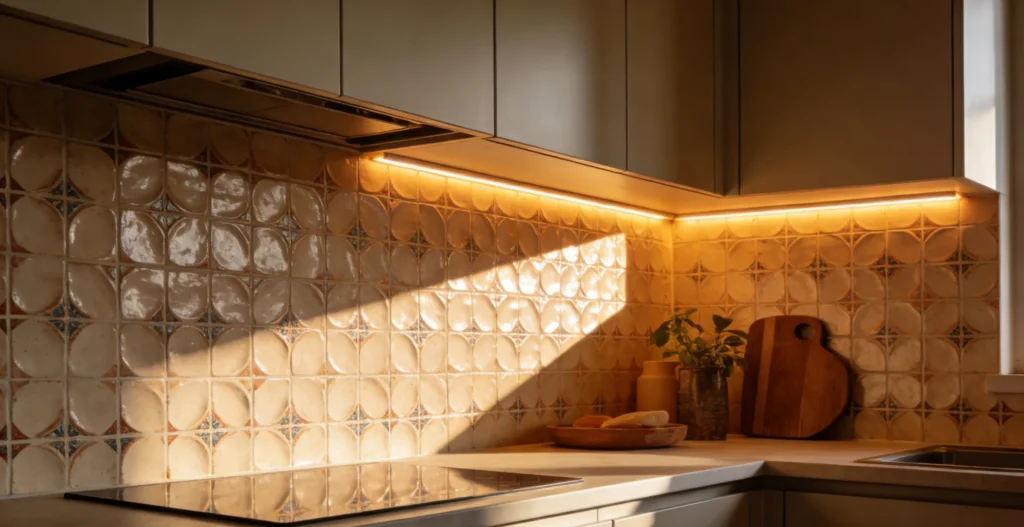
Your kitchen backsplash interacts with your under-cabinet lighting.
Textured Tiles (Zellige): Hand-crafted tiles with uneven surfaces create beautiful shadows and depth when down-lit.
Glossy vs. Matte: Use glossy kitchen tile in small or dark kitchens to bounce light around. Use matte finishes in bright kitchens to reduce glare.
4. Grout: The Secret Design Weapon
The grout color can change the entire look of your tile backsplash.
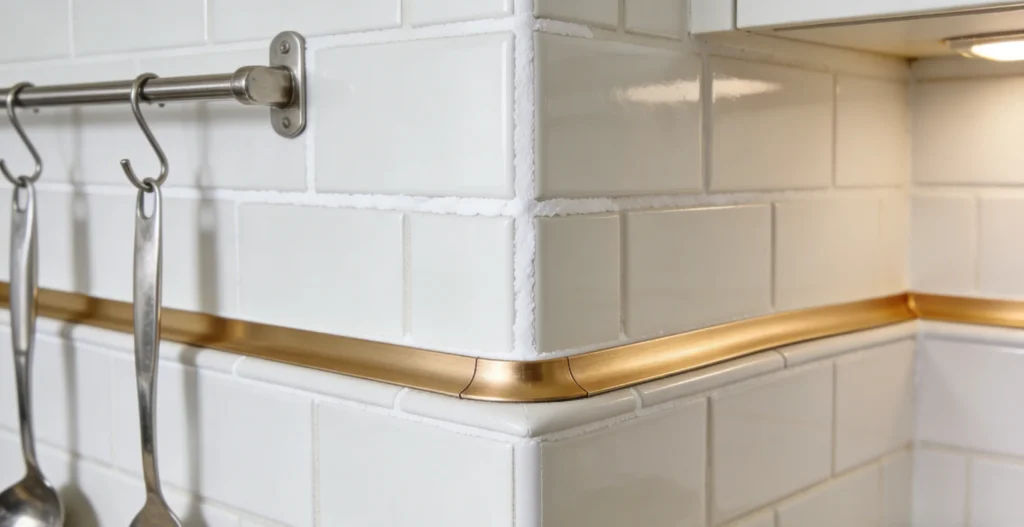
Bad: Leaving the raw clay edge of the tile exposed.
Good: Using “Bullnose” tile (rounded edge).
Best (Modern): Using a metal Schluter strip (Brass, Black, or Chrome) to create a crisp, clean frame for your tile.
6. FAQ
Q: Should the backsplash be lighter or darker than the cabinets? A: Contrast is key. If you have white cabinets, go for a colored or textured gray backsplash. If you have dark navy/green cabinets, a crisp white or cream kitchen tile provides balance.Q: Can I install a backsplash over drywall? A: Yes, standard drywall is fine for kitchens (unlike showers). Just make sure it is primed before applying the adhesive.