Tile That Looks Like Wood: The Perfect Blend of Rustic Charm and Modern Durability
We all love the warmth of hardwood floors. But in a kitchen, bathroom, or basement, water is wood’s enemy. Enter tile that looks like wood (Wood-look porcelain).
It is the fastest-growing segment in the flooring market for a reason: it solves the “wood in wet areas” problem. In 2026, the technology is so advanced that you have to touch the floor to realize it’s not timber.
1. The Technology: High-Def Inkjet
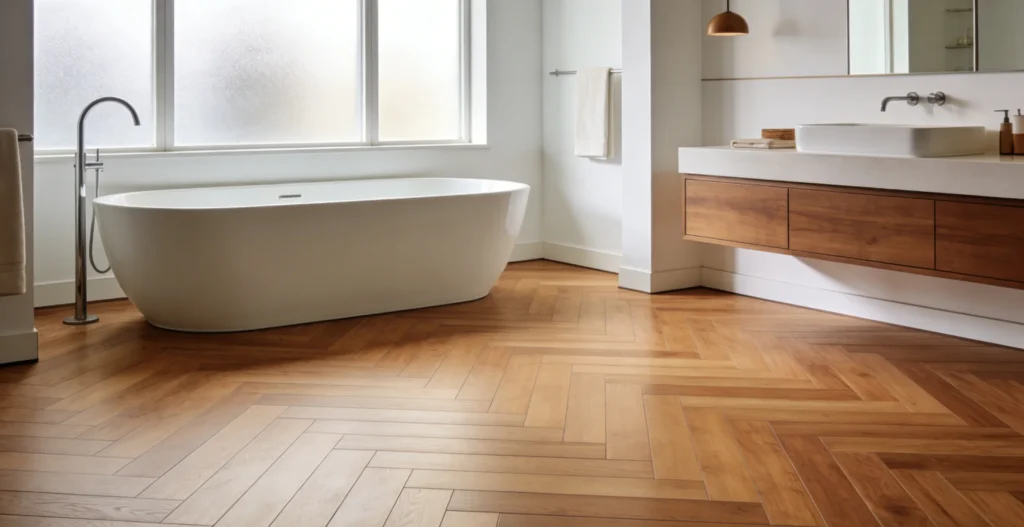
Modern tile flooring that looks like wood utilizes high-definition inkjet printing.
- Realism: Manufacturers scan real planks of Oak, Walnut, and Birch.
- Texture: High-end tiles use “EIR” (Embossed In Register), where the physical texture of the tile matches the printed grain and knots perfectly.
2. Why Choose Tile Over Real Wood?
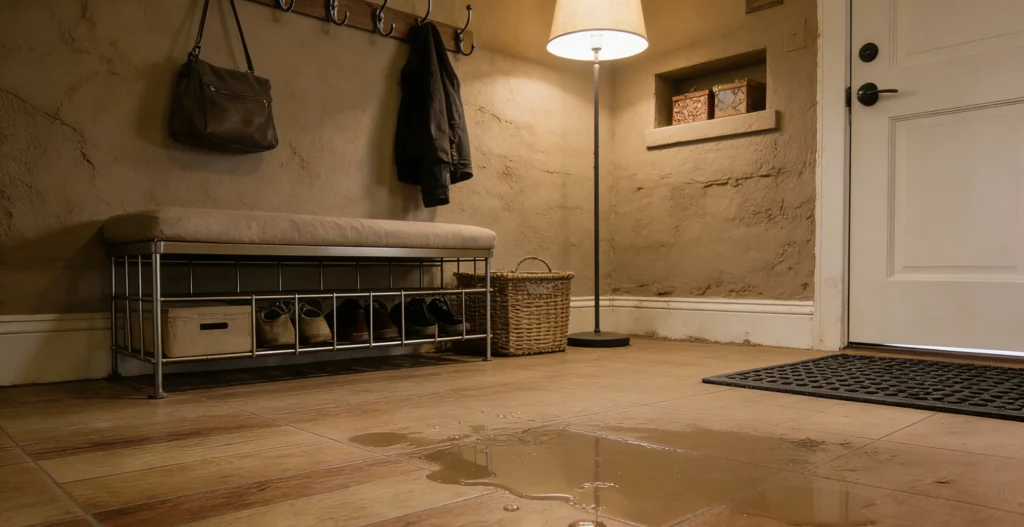
- Waterproof: Perfect for bathrooms and mudrooms where wet boots sit.
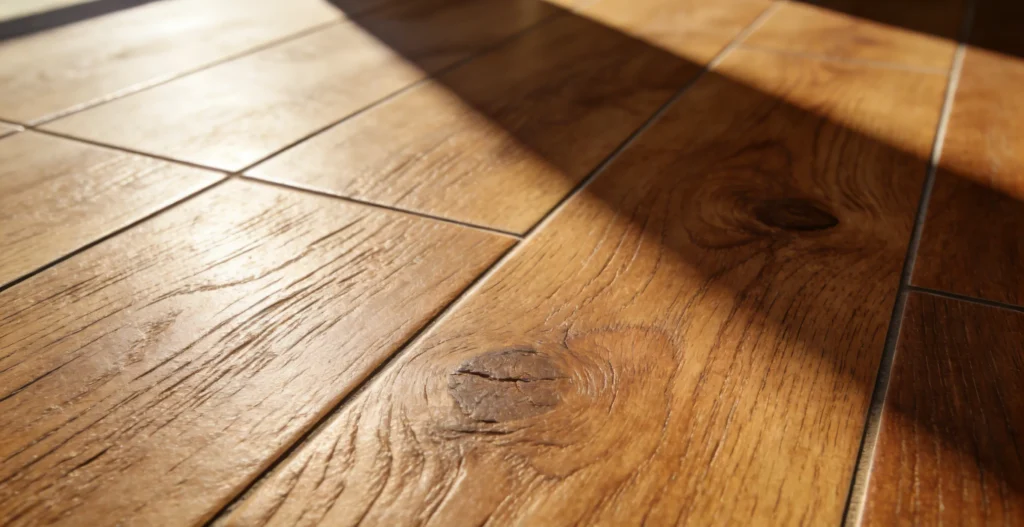
- Scratch Proof: Got a big dog? Real wood scratches instantly. PEI 4 porcelain tile flooring is impervious to dog claws.
- No Fading: Unlike real wood which fades in sunlight near patio doors, tile maintains its color forever.
3. Installation Secrets: How to Fake It
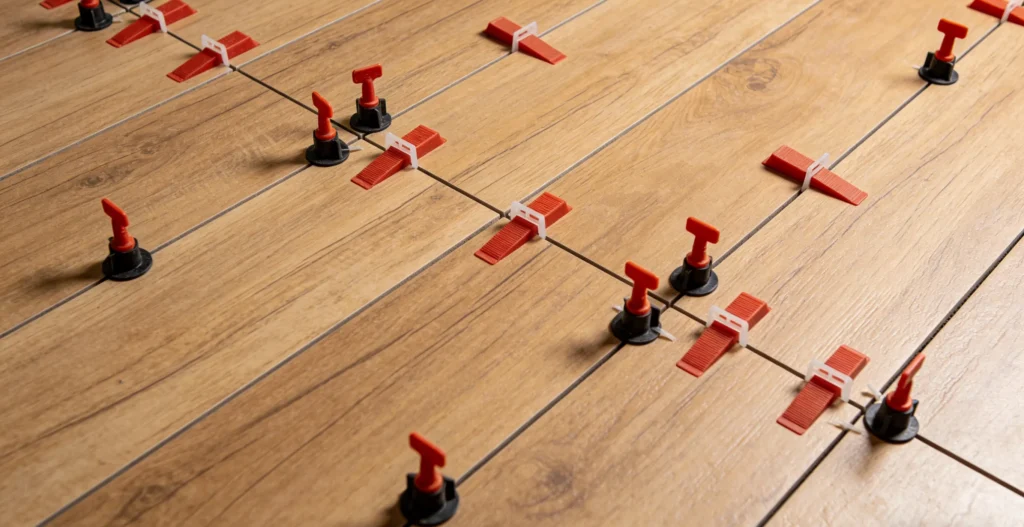
To make your tile flooring that looks like wood indistinguishable from the real thing, installation is critical.
- Rectified Edges: You must buy “Rectified” tile. This means the edges are mechanically cut straight, allowing for a tiny 1/16 inch grout line. Thick grout lines are a dead giveaway that it’s tile.
- Grout Color: Do not use white grout! Match the grout color to the darkest tone in the wood grain. You want the grout to disappear.
- Random Stagger: Never lay them in a “brick pattern” (50% offset) or a stair step. Use a random offset (max 33%) to mimic natural plank flooring.
4. Understanding Variation (V-Rating)
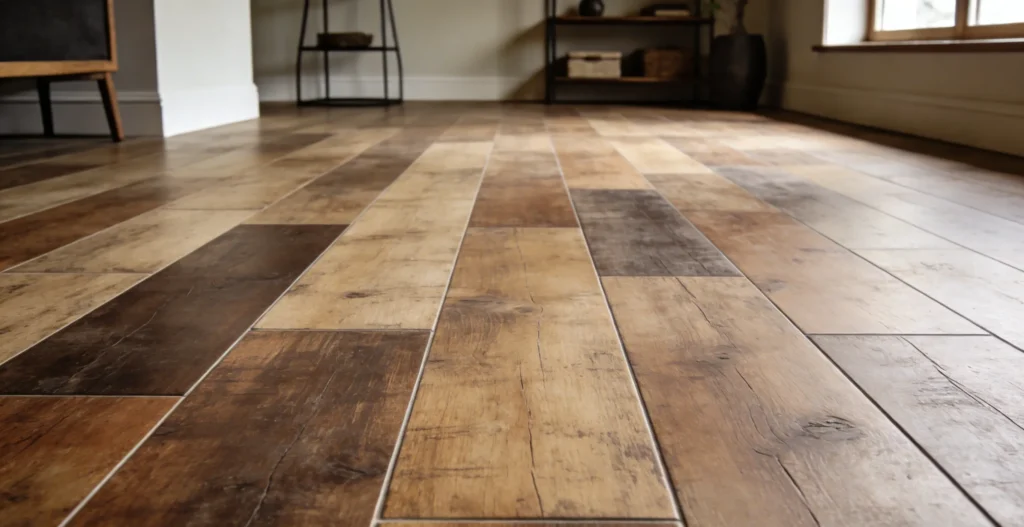
Check the box for the “V-Rating” (Tone Variation).
- V1: Uniform (Looks fake/plastic).
- V3-V4: High Variation. This is good! It means the box contains light planks, dark planks, and knotty planks, just like a real tree. This creates a natural, authentic floor.
5. Where to Use It
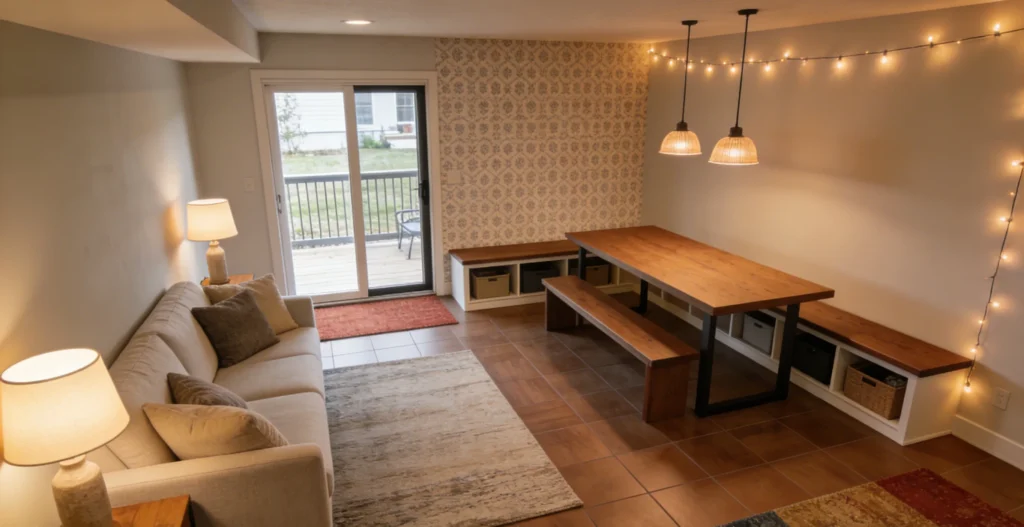
- Basements: The #1 use case. Basements are damp and prone to flooding. Wood rots; tile that looks like wood survives.
- Bathrooms: Run the planks from the bedroom into the bathroom for a seamless flow, but gain the waterproof protection needed for the tub area.
6. FAQ
Q: Is it cold?
A: Yes, it is ceramic. Area rugs or radiant heating are recommended for bedrooms.
Q: Does it chip?
A: It is very hard, but if you drop a heavy hammer, it can chip. However, porcelain is much harder to damage than wood is to dent.